

Introduction
Acne is one of the most common skin concerns affecting people of all age groups. While many individuals recover from acne after proper treatment, some are left with visible marks that can affect skin texture and overall appearance. These marks are known as acne scars and often develop after severe or untreated acne.
Acne scars usually occur when inflammation damages deeper layers of the skin during the healing process. When the body tries to repair this damage, it produces collagen. If the collagen production is either insufficient or excessive, it can lead to visible scarring on the skin.
Understanding the types of acne scars is important before choosing any treatment. Different scars affect the skin in different ways, and each type requires a specific approach for effective improvement. In many cases, individuals may benefit from advanced acne scar treatment to improve skin texture and reduce visible scars.
Cosmetic dermatologists commonly classify acne scars into several categories based on their shape, depth, and appearance. Recognizing these scar patterns helps determine the most suitable treatment plan and improves the chances of achieving smoother skin.
What Causes Acne Scars?
Acne scars develop when inflamed acne lesions damage the skin’s deeper layers. When acne becomes severe, the surrounding tissue and collagen structures can be disrupted during the healing process.
One of the primary causes of scarring is inflammation caused by acne bacteria. When the inflammation penetrates deeper layers of the skin, it destroys healthy tissue and creates structural changes in the skin.
Another common cause is the body’s collagen response during healing. If the skin produces too little collagen, depressed scars may form. On the other hand, excessive collagen production can create raised scars.
Several factors contribute to acne scar formation, including:
- Severe inflammatory acne
- Picking or squeezing pimples
- Delayed acne treatment
- Repeated acne outbreaks
These factors can result in different types of acne scars, each with unique characteristics and treatment needs.
Different Types of Acne Scars
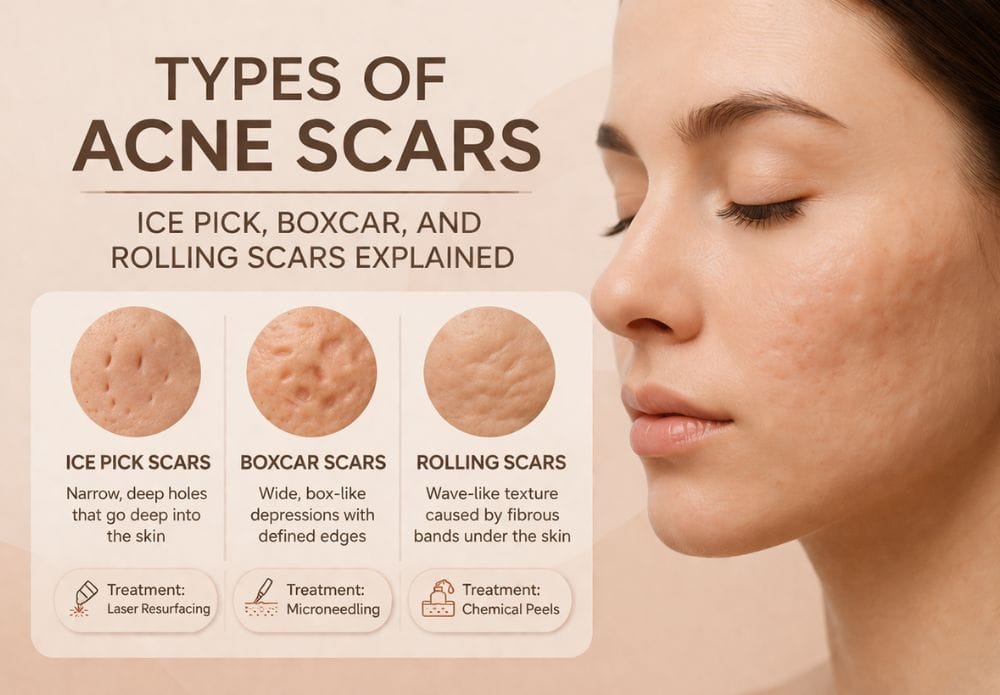
Dermatologists typically classify acne scars into three major categories based on their appearance and depth. Understanding these different types of acne scars helps determine the most effective treatment approach.
The most common scar types include:
- Ice pick scars
- Boxcar scars
- Rolling scars
Each of these scars affects the skin in a distinct way, which is why professional skin evaluation is important before beginning treatment.
Ice Pick Acne Scars
Ice pick acne scars are one of the most severe forms of acne scars. These scars appear as narrow, deep holes that extend into the skin. They resemble small puncture marks created by a sharp object, which is why they are called ice pick scars.
These scars typically measure less than 2 millimeters in width but can extend deep into the dermis. Because of their depth, they often appear like tiny pits on the skin surface.
Ice pick scars are most commonly found on the cheeks and forehead, although they can appear on other areas of the face as well.
How Ice Pick Acne Scars Form
Ice pick scars usually develop when deep inflammatory acne damages skin tissue. When the skin heals, the damaged tissue leaves behind a narrow, deep scar.
In many cases, these scars occur after cystic acne or severe acne infections that penetrate deeper layers of the skin.
Treatment Options for Ice Pick Scars
Because of their depth, ice pick acne scars often require professional dermatological procedures. Cosmetic Dermatologists typically recommend various acne scar removal treatments depending on the severity of the scars.
- LASER resurfacing treatments
- Medical microneedling procedures
- Chemical peels for skin resurfacing
- Subcision therapy to release scar tissue
These treatments stimulate collagen production and help improve the appearance of deep scars over time.
Boxcar Acne Scars
Boxcar acne scars appear as round or oval depressions with clearly defined edges. Unlike ice pick scars, which are narrow and deep, boxcar scars are wider and have a more uniform shape.
These scars create visible indentations in the skin and often resemble small craters. Their edges are usually sharp and well-defined, making them easier to identify.
Boxcar scars may vary in depth, ranging from shallow to moderately deep depressions in the skin.
Causes of Boxcar Acne Scars
Boxcar scars develop when inflammatory acne damages collagen in specific areas of the skin. During the healing process, the skin loses structural support, resulting in depressed scars.
Common contributing factors include:
- Severe acne inflammation
- Repeated acne outbreaks
- Delayed acne treatment
- Skin tissue damage from infection
Treatment Options for Boxcar Scars
Treatment for boxcar acne scars usually focuses on improving skin texture and stimulating collagen production. Dermatologists may recommend treatments such as:
- LASER skin resurfacing
- Dermal fillers for skin rejuvenation to lift depressed areas
- Radiofrequency microneedling
- Medical-grade chemical peels
These treatments help smooth the skin surface and reduce the appearance of indentations.
Rolling Acne Scars
Rolling acne scars create a wave-like or uneven appearance on the skin. Instead of sharp edges or deep pits, these scars produce gentle depressions that give the skin a rolling texture.
These scars occur when fibrous bands form between the skin and underlying tissue. These bands pull the skin downward, creating uneven contours.
Rolling scars are usually wider than other scar types and often appear across the cheeks and jawline.
Why Rolling Acne Scars Develop
Rolling scars develop when the healing process creates fibrous scar tissue beneath the skin surface. These tissue bands attach to deeper layers of the skin and pull the skin downward.
This tension creates the characteristic rolling appearance often seen with this type of scarring.
Treatment Options for Rolling Acne Scars
Treating rolling acne scars usually involves procedures that release the fibrous bands beneath the skin. Some commonly recommended treatments include:
- Subcision therapy
- LASER resurfacing treatments
- Microneedling procedures
- Nano Needling treatment for acne scars
These treatments help release the tension under the skin and promote smoother skin texture.
How Cosmetic Dermatologists Identify Types of Acne Scars
Accurate diagnosis is an important step in treating acne scars effectively. Cosmetic Dermatologists carefully examine the skin to identify the types of acne scars present.
During the consultation, the specialist may evaluate several factors, including:
- The depth of the scars
- The shape and structure of the scars
- Skin texture and elasticity
- The patient’s skin type
This detailed assessment allows the cosmetic dermatologist to design a personalized treatment plan tailored to the patient’s skin condition.
In many cases, patients may have a combination of multiple scar types, which requires a combination of treatments to achieve optimal results.
Which Treatment Works Best for Different Types of Acne Scars?
There is no single treatment that works for all acne scars. The most effective approach depends on the specific scar type and its severity.
For example, ice pick scars often require deeper resurfacing treatments or subcision procedures.
Boxcar acne scars may respond well to LASER resurfacing, dermal fillers, or microneedling techniques that improve skin texture.
Rolling acne scars typically require treatments that release fibrous tissue under the skin, such as subcision or collagen stimulation therapies.
Professional acne scar treatment programs often combine multiple techniques to address different scar patterns and improve overall skin texture.
When Should You Consult a Skin Specialist?
While mild acne marks may fade with time, acne scars often require professional care.
You should consider consulting a skin specialist if you notice:
- Deep or visible scars on the skin
- Increasingly uneven skin texture
- Persistent pigmentation or hyperpigmentation on the skin
- Long-lasting acne marks that do not improve
Early consultation can help identify the different types of acne scars and allow for timely treatment before the scars become more noticeable.
Preventing Acne Scars
Preventing acne scars is always easier than treating them later. Proper skincare and early acne management can significantly reduce the risk of permanent scarring.
Here are some helpful prevention tips:
Treat Acne Early
Seeking professional treatment for acne reduces inflammation and prevents deeper skin damage.
Avoid Picking Pimples
Squeezing or popping pimples can push bacteria deeper into the skin and increase the risk of scarring.
Follow Dermatologist Treatment Plans
Using medically recommended treatments helps control acne effectively.
Maintain a Healthy Skincare Routine
Following a daily skincare routine for healthy skin helps maintain skin health and supports the healing process.
Conclusion
Acne scars can significantly affect skin appearance and confidence, especially when they create uneven texture on the face. Understanding the types of acne scars is an important step toward choosing the right treatment.
The three most common scar types include ice pick acne scars, boxcar acne scars, and rolling acne scars, each with unique characteristics and treatment requirements.
Because individuals may have multiple types of acne scars, professional diagnosis is essential for selecting the most effective treatment strategy. Modern Acne Scar Treatment Options can significantly improve skin texture and overall appearance.
Consulting a cosmetic dermatologist ensures accurate diagnosis and access to advanced treatment options that can improve skin texture and overall appearance.