

Introduction
Acne is one of the most common skin concerns affecting teenagers and adults alike. Even after acne heals, many people are left with marks on the skin that can affect confidence and appearance. However, a common misunderstanding occurs when people try to identify whether these marks are scars or pigmentation.
The topic of Acne Scars vs Pigmentation often creates confusion because both appear as marks left after acne. Many people assume that every mark left by acne is a scar, but this is not always true. In reality, many of these marks are temporary discolorations that fade with time.
Some marks appear as dark or reddish spots known as post acne pigmentation, which occurs when the skin produces extra melanin during the healing process. These spots are usually flat and affect only the color of the skin.
Understanding the difference between acne scars and pigmentation is important because both conditions require different treatment approaches. Identifying the correct type of mark helps individuals choose the most suitable skincare or professional treatment for clearer and healthier skin. In some cases, people may require advanced acne scar treatment to improve skin texture and reduce visible scarring.
What Are Acne Scars?
Acne scars are permanent changes in the skin’s texture that occur when severe acne damages deeper layers of the skin. When acne-related inflammation penetrates the dermis, it can disrupt the normal healing process, leading to visible marks that alter the skin’s surface.
During the healing process, the body attempts to repair damaged tissue by producing collagen. If the body produces too little collagen, it may lead to depressed scars. If too much collagen is produced, raised scars may form.
Unlike temporary marks, scars change the structure of the skin, making them more difficult to treat without professional procedures.
Common types of acne scars include:
Ice Pick Scars
These are narrow and deep scars that extend into the skin. They resemble small puncture marks and can be challenging to treat.
Boxcar Scars
These scars appear as round or oval depressions with defined edges. They create a pitted appearance on the skin.
Rolling Scars
Rolling scars create a wavy or uneven texture across the skin surface due to fibrous tissue forming beneath the skin.
People who want to understand treatment approaches for these scars can explore different acne scar removal treatments recommended by cosmetic dermatologists.
Many people also confuse acne scars vs acne marks, assuming both are the same condition. However, acne marks are usually discolorations on the skin, while acne scars involve structural changes in the skin tissue.
What Is Post Acne Pigmentation?
Post acne pigmentation refers to the dark spots or patches that appear after acne heals. This condition occurs when the skin produces excess melanin during the healing process.
Melanin is the pigment responsible for skin color. When inflammation from acne triggers melanin production, it can result in darker spots that remain on the skin after the pimple disappears.
This condition is commonly known as post-acne pigmentation and is especially common in individuals with medium to darker skin tones, including many Indian skin types.
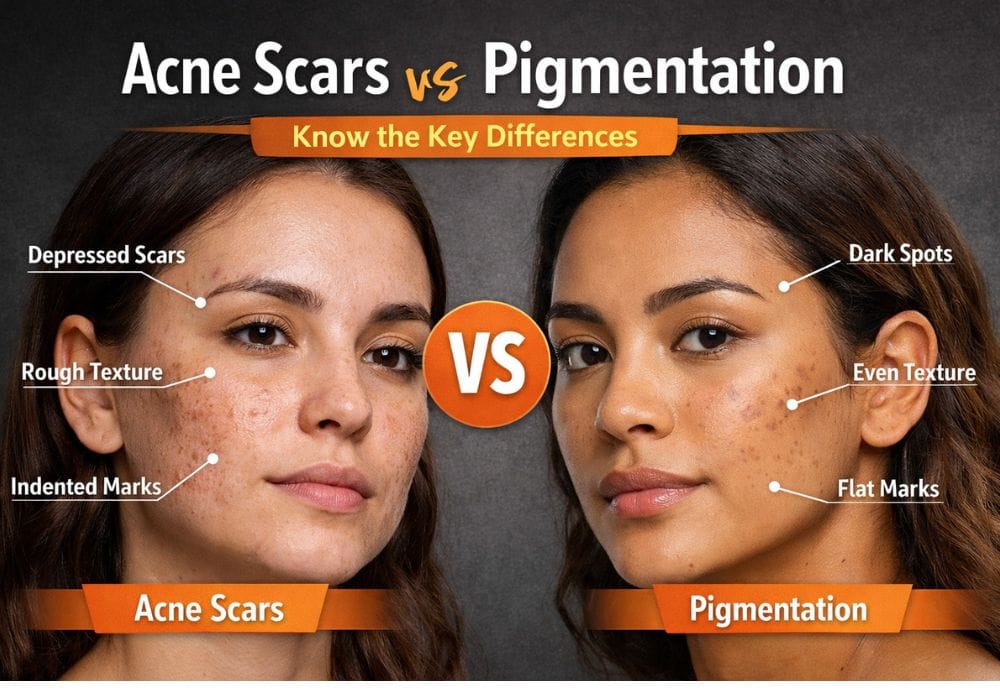
Unlike acne scars, pigmentation affects only the color of the skin. The skin surface remains smooth without any indentation or raised texture.
Common characteristics of pigmentation include:
- Flat dark brown or reddish spots
- Smooth skin texture
- Marks that gradually fade with time
Although these spots can last for weeks or months, they are generally easier to treat compared to acne scars.
People experiencing persistent discoloration can also learn more about hyperpigmentation and its treatment options.
Acne Scars vs Pigmentation: Key Differences
Understanding the difference between acne scars and pigmentation helps individuals determine the right treatment approach. While both conditions may appear similar at first glance, they affect the skin in different ways.
Skin Texture
One of the most noticeable differences between the two is skin texture.
Acne scars change the texture of the skin. They may appear as pits, depressions, or uneven areas on the skin surface.
Pigmentation, on the other hand, does not affect the texture. The skin remains smooth but shows darker or reddish spots.
Depth of Skin Damage
Acne scars occur when deeper layers of the skin are damaged due to severe inflammation.
Pigmentation occurs on the surface layer of the skin and is related to excess melanin production.
Healing Time
Pigmentation can gradually fade over time, especially with proper skincare and sun protection.
Acne scars usually do not disappear completely on their own and often require professional dermatological treatments.
Understanding these differences helps people recognize whether they are dealing with pigmentation or permanent scars.
How to Identify Acne Scars vs Acne Marks
Many people wonder how they can identify their skin condition without professional examination. While a dermatologist provides the most accurate diagnosis, there are some signs that can help differentiate acne scars vs acne marks at home.
Signs of Acne Scars
Acne scars usually show the following characteristics:
- Indented or raised areas on the skin
- Uneven or rough texture
- Visible pits or depressions
- Skin that looks bumpy under certain lighting conditions
These structural changes indicate damage to deeper skin layers.
Signs of Post Acne Pigmentation
Pigmentation marks usually appear as:
- Flat dark spots
- Brown, red, or purple discoloration
- Smooth skin surface without pits
- Marks that gradually lighten over time
These marks are generally related to post acne pigmentation, which affects skin color rather than skin texture.
Identifying these features can help individuals better understand the difference between acne scars and pigmentation.
Causes of Acne Scars and Pigmentation
Both acne scars and pigmentation develop as a result of inflammation caused by acne. However, their underlying causes differ.
Causes of Acne Scars
Acne scars often occur due to severe or untreated acne. When inflammation damages deeper layers of the skin, it disrupts the natural healing process.
Some common causes include:
- Severe inflammatory acne
- Squeezing or picking pimples
- Delayed or improper acne treatment
- Genetic factors affecting skin healing
These factors increase the likelihood of permanent scarring.
Causes of Post Acne Pigmentation
Pigmentation usually develops when the skin responds to inflammation by producing excess melanin.
Common causes include:
- Skin inflammation from acne
- Excessive sun exposure
- Hormonal influences
- Increased melanin activity
Understanding the difference between acne scars and pigmentation is important because both conditions arise from different biological processes.
Treatment Options for Acne Scars and Pigmentation
Because acne scars and pigmentation affect different layers of the skin, their treatments also vary.
Treatments for Acne Scars
Acne scars typically require professional dermatological procedures that stimulate collagen production and improve skin texture.
Some commonly recommended treatments include:
- LASER skin resurfacing
- Microneedling
- Medical chemical peels
- Collagen stimulation therapies
These treatments work by encouraging the skin to regenerate and smooth out uneven areas.
Treatments for Post Acne Pigmentation
Pigmentation treatments focus on reducing excess melanin and improving overall skin tone.
Common treatments include:
- Chemical peels for skin brightening
- Medical skincare products
- Pigmentation reduction therapies
- Sun protection and antioxidant skincare
Understanding acne scars vs pigmentation ensures that the treatment plan targets the correct skin concern.
When Should You Visit a Skin Specialist?
Although mild pigmentation may fade on its own, certain situations require professional evaluation.
You should consider visiting a skin specialist if:
- Acne scars appear deep or severe
- Pigmentation persists for several months
- The skin texture becomes uneven
- Multiple acne marks appear across the face
A professional consultation helps determine whether the marks are scars or pigmentation and allows the creation of a personalized treatment plan.
Tips to Prevent Acne Scars and Pigmentation
Preventing acne scars and pigmentation is often easier than treating them later. Following a proper skincare routine can significantly reduce the risk of long-term skin damage.
Some helpful preventive measures include:
Treat Acne Early
Early treatment reduces inflammation and prevents damage to deeper layers of the skin.
Avoid Picking Pimples
Squeezing pimples can push bacteria deeper into the skin and increase the risk of scarring.
Use Sunscreen Daily
Sun exposure can worsen pigmentation and slow down the healing process.
Follow Cosmetic Dermatologist Advice
Using medically recommended skincare products ensures proper acne management.
Maintain a Healthy Skincare Routine
Following a proper skincare routine for healthy skin helps maintain skin health and prevent complications.
Conclusion
Many people struggle to understand the difference between acne scars and pigmentation, leading to confusion about the right treatment approach.
The key difference in Acne Scars vs Pigmentation lies in how they affect the skin. Pigmentation changes the color of the skin, while acne scars alter the skin’s texture and structure.
Post acne pigmentation often fades with time and proper skincare, while acne scars usually require professional dermatological treatment.
Identifying the condition early helps individuals choose the right treatment strategy and achieve better skin health. Consulting a cosmetic dermatologist for professional acne scar treatment can help improve skin texture and appearance.